
Back in August of 2023, I found myself meditating on trust and what it means to trust God with my whole heart. I found that if we don’t spend time with the Father in His word, in relationship with Him, then how can we truly know Him? How can we know His nature or the truth of His word, if we don’t read His word? And how can we know what His word says as it relates to our prayer time with HIM? This is where we begin to understand the power of prayer in the life of a believer.
One of the greatest keys to successful Christian living is hearing the voice of God. It is God’s will for all of us to prosper and fulfill a divine plan for our lives, but it is impossible to do that without hearing from God.
~ Barry Bennett ~
John 10:27-29 (NKJV) says, “My sheep hear My voice, and I know them, and they follow Me. And I give them eternal life, and they shall never perish; neither shall anyone snatch them out of My hand. My Father, who has given them to Me, is greater than all; and no one is able to snatch them out of My Father’s hand.”
No one can pluck us out of God’s hand, separate us from God or from His love. But this doesn’t say we can’t separate ourselves from Him. Jesus doesn’t force us to get saved nor does He force us to stay saved either.
The Greek word used for “know” is GINOSKO, and it means to come to know, to recognize, understand, or to understand completely. In the scripture above Jesus is saying He understands His sheep completely. GINOSKO is used in Matthew 1:25 (“knew”) and Luke 1:34, referring to the connection or union between a man and a woman. This knowing is not just intellectual but a personal, intimate understanding.
We can’t hear God or know Him if we don’t first spend time with Him and have a relationship with Him. Some people who don’t know God think they are really living their best life. They may have money, fame, and assets. But the truth is they have never really lived. Without God we cannot see life (John 3:36). Everlasting life isn’t something that takes place in heaven. Anyone who believes on Jesus HAS everlasting life (John 3:16, 5:24, and 6:47).
Related: Trusting the Good Shepherd
Relationships Are About Communication
The definition of the word relationship is: the way in which two or more concepts, objects or people are connected, or the state of being connected. We need to stay connected to our heavenly Father, and one way for us to do that is through prayer.
The more we spend time with the Father in relationship with Him, the more we begin to know His character. What do you do in your down time or spare time? Do you watch TV, read the Bible, or listen to biblical teachings? How much time do you spend praying? None of this is to condemn anyone. It’s just to make us aware of our time and how we spend it.
We should be a master of our time and not a servant. When we feel we don’t have enough time is when time is in the wrong position.
~ Bryan Nutman
Colossians 4:2 (NASB) says, “Devote yourselves to prayer, keeping alert in it with an attitude of thanksgiving.”
To devote is to give ALL or a large part of oneself or time to a person, activity, or a cause – in this case, to give a large part of ourselves and time to God! The KJV & NKJV say to continue earnestly in prayer, being vigilant with thanksgiving.
We are discussing the power of prayer. Prayer is simply communication with God, and it should be foundational in a Christian’s life. In the Greek, the word PROSKARTEREO, which was translated “continue” (in NKJV Colossians 4:2), means “to be strong towards, i.e. (to a thing) to persevere in, be constantly diligent or continually steadfast” (Strong’s Concordance). Prayer needs to be a discipline in the Christian life.
Be Vigilant in Prayer
To be vigilant in prayer means to keep a lookout for any onset of the enemy and then engage your authority in prayer. To watch in prayer is to look at things through the eyes of prayer. Things look very different when we have prayed about them.
We need to also watch with a heart of thanksgiving. By this I mean we should be alert, listening and looking for direction from the Holy Spirit as we pray. In other words, prayer should not be a monologue. We should be expecting to hear from God when we talk to Him.
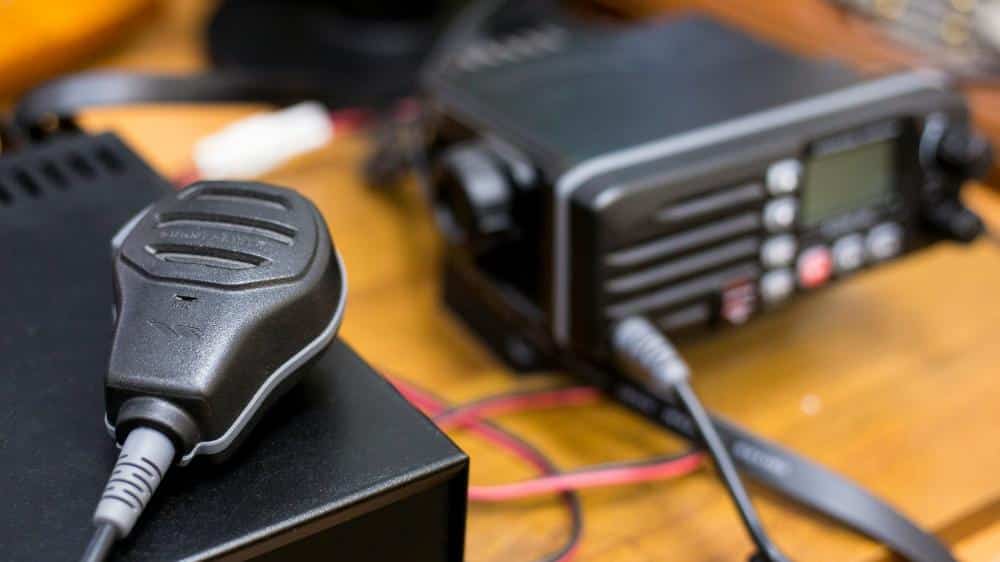
The old CB radio transmitters did not send and receive messages at the same time. When one party finished speaking, he or she would say “over,” and then wait for the other party to speak. Likewise, there are times when we need to say “over” in our prayer time with the Lord and then listen for what He wants to say to us. The way some people pray, the Lord can’t get a word in edgewise.
Our power in prayer is the word of God! God wants to use His power in the world. However, for Him to do so, we must understand how to appropriate His word.
~ Myles Munroe
God’s word is so great that if our faith is the size of a mustard seed, mountains can be moved. Why did Jesus use a mustard seed to describe faith?
Faith the Size of a Mustard Seed
In Jesus’ day, the mustard seed was used to represent the smallest of things. And with a diameter of 1 to 2 millimeters, it’s a fitting illustration! By using this illustration to describe faith, Jesus is directing our attention, not to the quantity or strength of our faith, but to the object of our faith. Our faith is only as strong as the object in which it’s placed. If our faith, even if it’s the size of a mustard seed, is placed in the all-powerful God, great things can happen. It is not necessary to have great faith; even small, pure faith is enough, if it is faith in our great God.
Look at the account of the epileptic boy who was healed in Matthew 17:14-21. When we take this scripture in context of the words faithless and perverse (v. 17), Jesus wasn’t saying the reason they couldn’t cast the demon out was because they didn’t have any faith. They did have faith – that’s why they were confused and asked this question. They had cast out demons before (Luke 9:1-6 and 10:17-21) and expected positive results this time, but they didn’t get them, and they wanted to know why.
Unbelief Negates Faith
It is possible to have faith yet not see the desired result, because of unbelief. Unbelief negates or counteracts faith.
It’s like hitching a horse to a heavy weight. The horse can move that weight if there isn’t any counterbalancing force. But if you hitch another horse up to the other side and have it pull in the opposite direction at the same time, tremendous force will be exerted but the weight won’t move very much if at all because of the opposing force. Just like having a friendly game of tug of war.
It doesn’t take great faith to see miracles, just pure faith without the opposing force of unbelief. So, the question for us is, how will we respond to what the word reveals about God’s character in times of prayer if we get results like the disciples? Have you ever prayed believing a promise, and it didn’t happen?

Numbers 23:19 (BSB) says, “God is not a man, that He should lie, nor a son of man, that he should change his mind. Does he speak and then not act? Does he promise and not fulfill?”
You do believe that God is honorable and that He will keep His promises, right? A basic principle of answered prayer is belief in the trustworthiness of the One to whom we are praying – Papa God, our ABBA Father! The power of your prayers depends on your trust in God’s word working in your life only as you believe it.
1 Thessalonians 2:13 (AMP) says, “And we also thank God continually for this, that when you received the word of God [concerning salvation] which you heard from us, you welcomed it not as the word of [mere] men, but as it truly is, the word of God, which is effectually at work in you who believe [exercising its inherent, supernatural power in those of faith].”
We demonstrate that we believe someone – in this case, God – when we show confidence in His Word and Character. If you do not believe Him, you reveal that you do not trust Him.
What have you demonstrated about your belief or disbelief in God and His word? If God promises something, but you don’t believe it will come to pass, you’re telling God, “I have no confidence in you.”
You might be saying, “Tracey, I would never say that to God.” Yet we are saying that to Him all the time by not believing His word. Our belief is evidence that we trust God. He is not impressed by how many scriptures we can quote or how long we pray. He is moved and convinced when we believe what He has told us. We then prove that we believe what He has said by acting or responding to it. Belief is trust in action.
Psalm 9:10 (NKJV) says, “And those who know Your name will put their trust in You; for You, LORD, have not forsaken those who seek You.”
Those who really know the Lord trust Him. Those who don’t trust the Lord don’t know Him. It’s that simple. If we want the word to work powerfully in our lives, in our prayers, we must make sure it is inside of us. Jesus said, “If you abide in Me, and My words abide in you, you will ask what you desire, and it shall be done for you” (John 15:7). Believing God is simply taking Him at His word, making requests based on His Word, and then acting as if you own the title deed to what He has promised! And when we are praying the word, taking God at His word, our prayers are Power Packed!
Related: Faith in the Waiting
Abide in Him
John 15:7 – abiding means lasting a long time; enduring, remaining, steadfast. We cannot claim to abide in Jesus if we only have communication with Him occasionally. Abiding in Jesus involves constant communion with Him. “The just live by faith” (Romans 1:17). They don’t just visit there occasionally.
In our home we have 2 Corinthians 5:7 on our dining room wall. Our version reads, “I will walk by faith even when I cannot see.” Faith is seeing – it’s just not seeing with our physical eyes. It is seeing with the eyes of our hearts through the revelation of the Holy Spirit as He unveils the truth of God’s Word to us.
We aren’t supposed to live by what we see, but by what Jesus told us. That means what we know about God, His character, and what His word says is more important in our prayer life than what we see with our physical eyes.
When we walk and pray according to what we know to be true in the Word, we will overcome what we see. It is what we see that is depressing us because we may see that we have problems, bills, or failed health, etc. Yet, the Word says we are healed, prosperous, and overcomers.
Read 2 Timothy 4:18. If we know that God will deliver us from every tribulation, then as far as we are concerned, we don’t really have any problems that He can’t deliver us from. We are just experiencing temporary discomfort, or, as Paul said, a light affliction (2 Corinthians 4:17-18).
In this account, Paul was not saying that nothing bad would ever happen to him. Bad things do happen sometimes – Paul had already had many bad things happen in his life. He was in prison, and even facing possible execution, at the time he wrote this. Paul was expressing his faith that regardless of what happened, the Lord would be with him and that he would ultimately triumph through Christ. We too have that same promise as believers.
The word “temporal” (v. 17) means temporary. Any problem that we can see is limited by time – it will pass. God doesn’t know time. He lives in one BIG NOW! When problems begin to oppress us, we should tell them that they’re only temporary and look to the future.
Go back to Psalm 9:10. What a great promise we have that if we seek the Lord, He will not forsake us (Hebrews 13:5). We don’t have to be perfect – we just need to be seeking the Lord, and He’s always there. The reason we can be content with what we have is because we have Jesus. So many people don’t.
Confidence and Compassion in Prayer
We see the power of prayer throughout Scripture in the lives of ordinary men and women whose prayers were answered. They were not super-saints – they were people just like you and me. They simply put their faith in God, trusted His character and His word.
In James 5:17-18 it tells us that Elijah was a man, a human being, just like us. He prayed earnestly that it would not rain, and it did not rain on the land for three and a half years. He prayed again, and the heavens gave rain, and the earth produced its crops.
This wasn’t just casual prayer by Elijah (James 5:16b) – it was serious, determined, and sincere prayer.
Prayers of faith get results.

Hebrews 4:12-16 (NLT) – “For the word of God is alive and powerful. It is sharper than the sharpest two-edged sword, cutting between soul and spirit, between joint and marrow. It exposes our innermost thoughts and desires. Nothing in all creation is hidden from God. Everything is naked and exposed before his eyes, and he is the one to whom we are accountable.”
Christ Is Our High Priest
“So then, since we have a great High Priest who has entered heaven, Jesus the Son of God, let us hold firmly to what we believe. This High Priest of ours understands our weaknesses, for he faced all of the same testings we do, yet he did not sin. So let us come boldly to the throne of our gracious God. There we will receive his mercy, and we will find grace to help us when we need it most.”
What a Tremendous Gift the Bible Is to Us
It gives us power to know and do the will of God, the power to pray with certainty, boldness, and power in all situations, and the power to know that God hears us when we pray.
1 John 5:15 (CSB) says, “And if we know that he hears whatever we ask, we know that we have what we have asked of him.”
God hearing us is dependent on our prayers being ordered according to His will (1 John 5:14). This isn’t to say that the Lord doesn’t know what we pray or only “hears” certain prayers. He hears every word that every person speaks, as revealed in Matthew 12:36.
Our prayers don’t make God move. God has already moved by grace and provided everything we could ever need through the atonement of Christ. God doesn’t respond to our faith; our faith is a positive response to what God has already accomplished. Faith only appropriates what God has already provided through grace.
The Power of Prayer – Relationship with God: Recap
- Hearing God is the key to the abundant life.
- The more we spend time with the Father, the more we begin to know His character.
- Our faith is a positive response to what God has already accomplished.
- The power of our prayer depends on our trust in God. The word will work in our life only as we believe it.
- Believing God is simply taking Him at His word, making requests based on His Word, and then acting as if you own the title deed to what He has promised!
